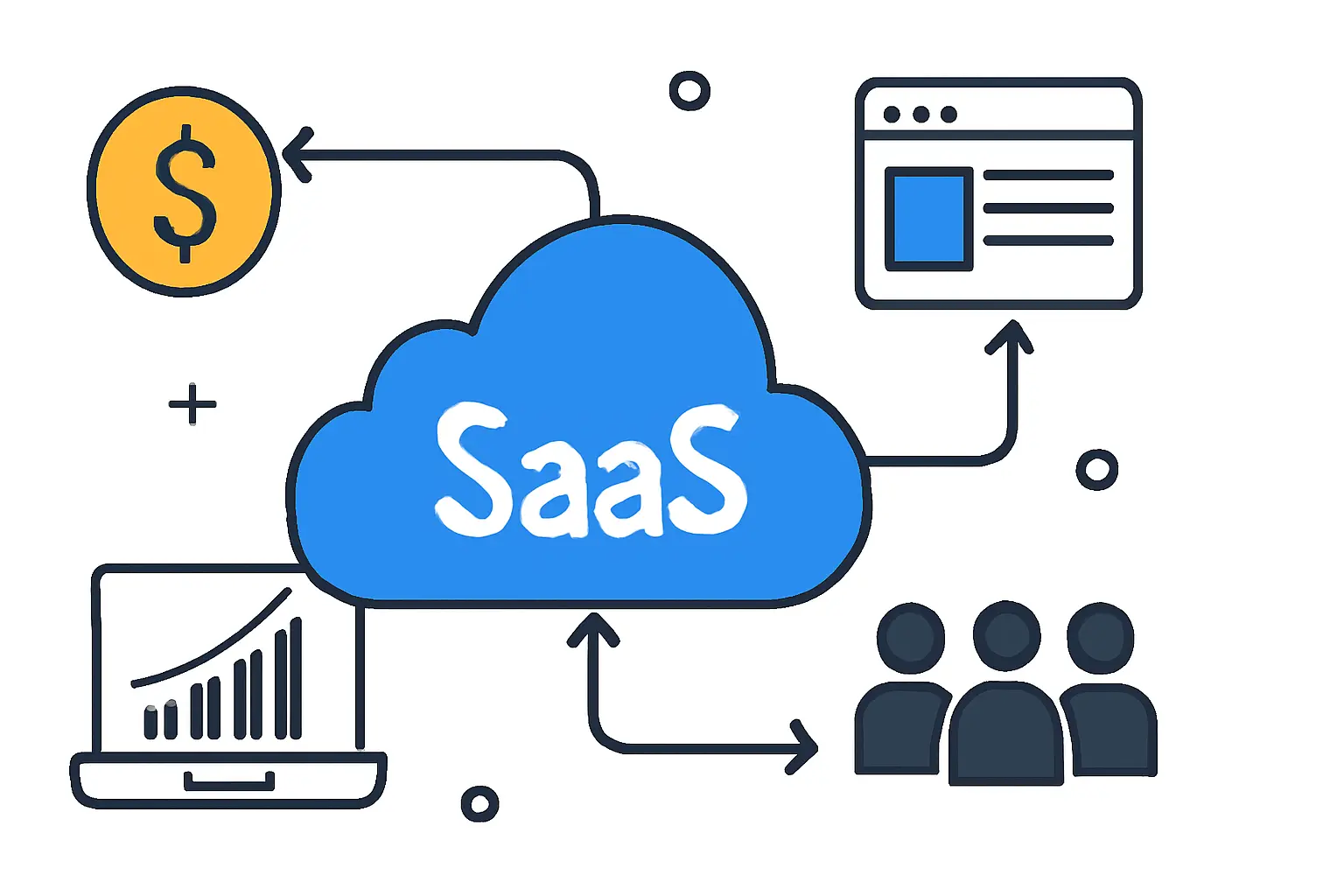
The Power of the SaaS Business Model: Innovation, Flexibility, and Growth
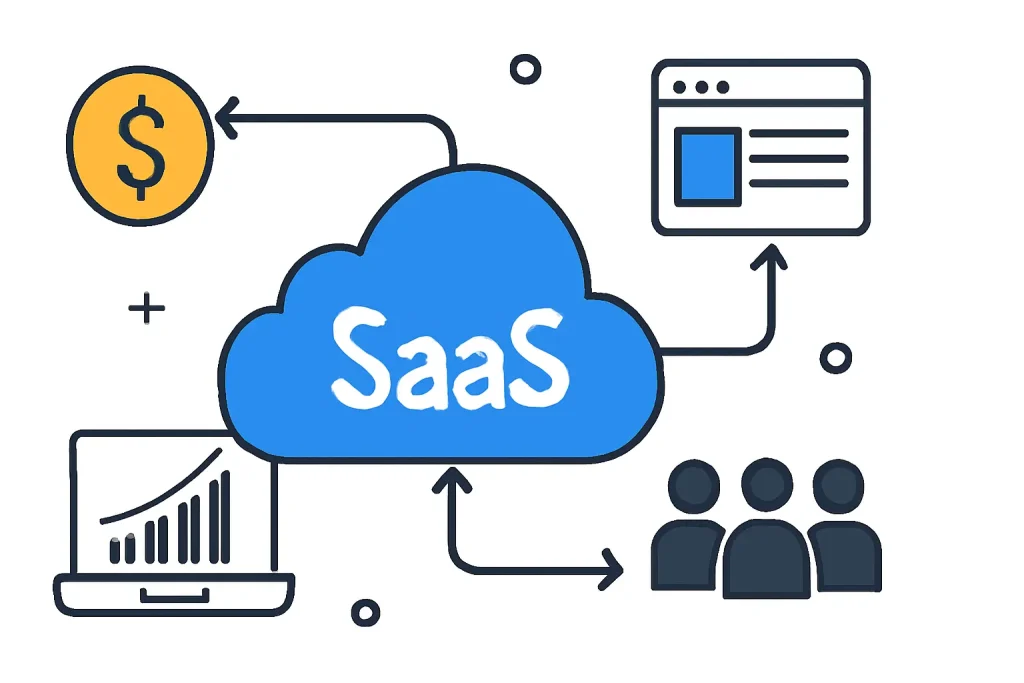
In the past, software came in boxes or downloads, paid upfront with no easy updates or support. Now, over 80% of businesses use cloud-based tools instead, from team chats to photo editors. This shift happened fast, and it’s all thanks to the SaaS business model, which changed how software is made, sold, and used.
The SaaS model solved the problem of expensive software licenses and big upfront payments. It turned software into a flexible subscription model that delivers updates, support, and access without long-term contracts.
This guide explains how the SaaS business model works, its types, pricing plans, growth metrics, and real examples. It’s built for startup founders, curious students, software developers, and anyone exploring how modern software delivery drives success.
What Is SaaS and How Does It Work?
The term SaaS means a type of web‑based software that people access through a browser and log in online. This model offers flexibility and suits the modern digital world with cloud apps that run on servers instead of local installs. The linked subscription model removes heavy upfront costs and simplifies access for users.
Traditional licensed software required buying a permanent copy, then installing it on a computer and updating it manually when needed. In contrast, SaaS uses a subscription model where users pay regularly and get automatic updates.
The provider manages maintenance, support, and performance behind the scenes to keep everything running smoothly.
- Dropbox: A cloud‑apps service for file storage and sharing, accessed by login from any device.
- Canva: A web‑based software for design that offers templates, tools, and updates without installation.
- Zoom: A cloud video meeting platform that works in a browser or app and scales from small teams to large webinars.
In the SaaS model, the software lives in the cloud and users access it by internet connection from a browser or mobile app. The provider hosts servers, handles updates and support, and users simply log in to use the service. This cloud delivery method means people get new features fast and don’t worry about installation or hardware.
Inside the SaaS Business Model (Core Mechanics)
Before diving into the details of how the SaaS business model really functions, let us frame its essential nature clearly. In this model, software is delivered via the internet rather than via physical discs or one‑time purchases.
Users access services through a browser or an app, and the provider manages hosting, updates, and support. The SaaS model shifts focus from product ownership to ongoing access, which completely changes how companies grow, charge, and support users.
SaaS Business Model Overview
The SaaS business model means software is offered as a service instead of a static product. Customers subscribe and gain access to a cloud service rather than buy a license once.
The provider hosts the software, handles uptime, provides updates, and ensures accessibility across devices. This model reduces barriers for users and creates continuous relationships. Instead of worrying about versions or installations, users expect software to always be ready and updated. That mindset allows SaaS brands to focus on features, reliability, and experience instead of one-time delivery.
Revenue Structure and Growth Engine
The foundation of every SaaS business rests on steady income and long‑term relationships. This model replaces one‑time purchases with ongoing revenue streams that grow with customer loyalty and usage.
- Recurring billing means users pay monthly or yearly, and the business earns a steady income stream.
- Customer retention becomes vital because keeping users matters more than one‑time sales.
- Low distribution cost arises because providers deliver via the internet and scale easily.
- Upsells and usage-based pricing let businesses increase earnings without raising base prices.
The combination of these mechanics makes the model powerful. Because new customers add revenue and existing customers continue paying, growth compounds and value expands. Revenue becomes more predictable and stable over time, which attracts investors and improves business planning.
Built-in Scalability and Cost Advantages
Imagine a company adding a new server region and then onboarding thousands of users with minimal incremental cost. The SaaS business structure allows growth without matching growth in cost. Many software delivery models require huge hardware investments or manual installs.
In contrast, the cloud delivery approach allows rapid scaling and efficient operations while maintaining margin. A product used by ten users today can support ten thousand users tomorrow without major restructuring. That flexibility helps startups compete with giants by keeping teams small but impact wide.
Automation, Hosting, and Backend Efficiency
Behind every SaaS product lies a smart system that keeps the entire operation seamless for users. Automation and hosting together make the SaaS experience fast, consistent, and reliable across millions of accounts.
- User-centric onboarding simplifies new user activation and reduces friction.
- Automation of billing, updates, and support frees teams from repetitive tasks.
- Centralized hosting in the cloud ensures updates roll out smoothly and uptime stays high.
Together, these backend systems let the provider focus on innovation and service delivery rather than physical distribution or manual installs. Because users expect constant access, SaaS teams rely on server monitoring, auto-scaling, and backup systems to keep things running without interruptions. These tools are often invisible to users but critical for keeping satisfaction high and churn low.
Comparing the Most Common SaaS Model Types
Different organizations use different versions of the SaaS model to match audience needs, price points, and use cases. This section shows the major model types side by side.
You will see what works for B2B SaaS, B2C SaaS, vertical SaaS, horizontal SaaS, and freemium pricing structures. Then you will see which brands illustrate each and who they serve best.
B2B SaaS and B2C SaaS
In the B2B SaaS model, companies subscribe to cloud apps that serve business workflows. The pricing may be monthly or yearly, and onboarding often includes support and training. In contrast, B2C SaaS caters to individuals and has simpler signup, lighter support, and a self‑service growth strategy.
Vertical SaaS and Horizontal SaaS
Vertical SaaS targets one industry, so it offers features and workflows directly tuned to that sector’s needs. Because of its focus, it may charge more and face less competition. Horizontal SaaS delivers broad‑scope tools that many industries can use; this model appeals to large markets but competes more broadly.
Freemium Pricing Model
The freemium pricing model gives users free basic access and then encourages an upgrade for premium features. This structure helps cast a wide net, attract many users quickly, and convert a portion into paying customers. It suits products aiming for viral growth and wide adoption.
How SaaS Companies Actually Make Money
Modern SaaS companies often start small with one pricing plan, then shift as their customers and features grow. Each pricing model fits a different goal. Some focus on adoption, others aim for higher revenue per user or long-term contracts.
Stage 1: Flat-Rate Pricing
At first, a SaaS company may choose flat-rate pricing for clarity and simplicity. A single price gives users access to all features. This model works best when the product offers a standard feature set and appeals to one size of customer.
It’s easy to explain and keeps income steady month by month. However, it lacks flexibility and limits how much you can earn from power users.
Stage 2: Tiered Pricing
After gaining some traction, the business shifts to tiered pricing with multiple plans. These plans vary by features, usage limits, or customer size. Users pick the plan that suits them and upgrade as their needs grow.
This approach serves different customer types and makes upselling smoother. But offering too many choices may confuse buyers or complicate product packaging.
Stage 3: Usage-Based Pricing
In a mature stage, the company might add usage-based pricing that charges based on consumption. Customers pay for what they use, so large users pay more and small users pay less. This model fits products with variable demand or scalable consumption, like data, API calls, or storage.
It scales naturally with user activity and rewards efficiency. Still, it makes revenue harder to predict and may unsettle customers with changing bills.
Stage 4: Freemium Model
The freemium model enters when you aim to attract a large user base through a free tier. The free plan gives basic features and invites an upgrade for premium capabilities. It lowers entry barriers and builds product-led growth from self-serve users.
Freemium boosts signups and brand reach quickly. The downside is that only a small portion of users convert, and free users still need resources.
Stage 5: Enterprise Custom Pricing
At the highest level, the business offers enterprise pricing with custom plans, large contracts, and tailored services. Enterprises may require special features, service levels, and billing terms. This stage maximizes revenue per customer and drives long-term partnerships.
It creates strong long-term deals and high returns per account. On the flip side, the sales process is slower, and client support demands grow heavier.
Choosing the Right Model
The right pricing strategy should reflect your product’s value, customer segments, and market stage. If your product is simple and early-stage, a flat rate works best. When you address multiple segments, tiered pricing becomes a better fit.
If usage varies widely, usage‑based pricing wins. If you want rapid adoption, freemium helps. For enterprise clients, custom pricing design is key. You must balance predictability, flexibility, and growth potential.
The Metrics That Make or Break SaaS Growth
Every SaaS company needs clear numbers to guide its growth and measure health. These key metrics show how revenue, cost, and customer behaviour tie together. Founders make smarter decisions when they track monthly recurring revenue, churn, acquisition cost, and lifetime value.
Monthly recurring revenue (MRR) measures how much revenue a SaaS business earns every month from subscriptions.
- Formula: MRR = Number of active subscriptions × Monthly subscription fee. For example, 500 users paying $20 each gives MRR of $10,000. A growing MRR means your product gains traction and stability. Annual recurring revenue (ARR) is simply the yearly version of MRR and provides a long‑term view.
- Formula: ARR = MRR × 12. If your MRR is $10,000, your ARR becomes $120,000. ARR helps you forecast future income and compare business value across years. Customer acquisition cost (CAC) tracks how much you spend to win each new customer.
- Formula: CAC = Total marketing + sales costs ÷ Number of new customers. For example, spending $30,000 and gaining 300 customers yields a CAC of $100. Lower CAC means more efficient growth. Customer lifetime value (LTV) estimates total revenue from a customer over their entire relationship with you.
- Formula: LTV = Average revenue per customer ÷ Churn rate. Suppose customers pay $20 monthly and churn at 5 percent monthly, LTV equals $20 ÷ 0.05 = $400. Higher LTV means each customer brings more value. Churn rate measures the percentage of customers or revenue lost during a period.
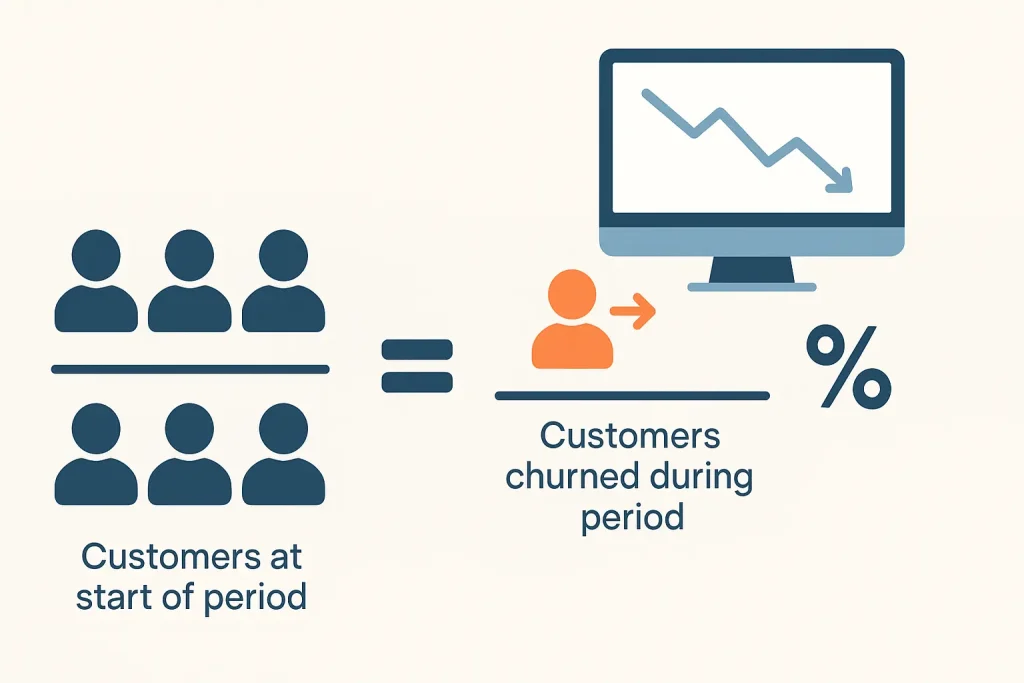
- Formula: Churn rate = Number lost during period ÷ Number at start. If you start with 1,000 customers and lose 50 in a month, the churn rate is 5 percent. High churn warns that the product or service may need improvement. Net revenue retention (NRR) shows how your existing user base grows or shrinks over time after expansions, churn, and downgrades.
- Formula: NRR = (Starting revenue + Upsells – Downgrades – Churn) ÷ Starting revenue. If you start with $100,000 in revenue and end with $105,000 after changes, NRR is 105 percent. Above 100 percent means you grow within your customer base.
These metrics interconnect in meaningful ways. CAC and LTV define whether your growth is sustainable. If each customer costs $100 to acquire and brings $400 in lifetime value, that 4:1 ratio signals strong unit economics. A high churn rate will reduce LTV and degrade that ratio quickly.
MRR and ARR reflect your revenue base size and growth rate. A rising MRR means your business is scaling, but if churn is high, you may lose more than you gain. Meanwhile, NRR measures whether your existing customers help you grow through upgrades or cost you through downgrades and churn.
To act on these metrics, you must monitor them regularly. Ask whether CAC is rising, LTV is falling, or churn is creeping up. Track how MRR growth compares to churn and how NRR trends show user expansion or contraction. These signals guide product changes, pricing adjustments, and customer success efforts.
What Founders Love (and Hate) About SaaS
Some parts of running a SaaS business feel like magic. Others feel like a constant uphill climb. Founders often praise the recurring revenue and flexible growth, but they also face pressure from churn, support needs, and operational hurdles.
The table below highlights what SaaS founders often enjoy most, and which challenges they deal with along the way.
Founders value recurring income because it lets them forecast future cash and invest with confidence. They know monthly subscriptions give revenue they can count on. With that steady foundation, they can hire, innovate, and focus on growth instead of chasing sales.
The scalable revenue model matters since adding users costs less than before. When software serves more people with close to the same infrastructure, the margin improves. That means your growth can rely more on strategy than on adding team members or hardware.
Predictable cash flow helps founders stay focused and make better decisions. When invoices arrive monthly, you avoid sudden revenue drops or uncertain spikes. You can plan ahead, set budgets, and track performance with more clarity and control.
On the flip side, customer churn creates real pain for founders. Losing even a few users every month means you must replace them just to hold steady. That eats into profit and demands stronger retention efforts.
Support load grows fast and quietly for many SaaS founders. As you add users, you also add tickets, queries, and training. If you didn’t build a support engine early, it becomes a burden. That slows growth and shifts focus to maintenance.
Onboarding complexity drags resources and frustrates new customers. Many users drop off before they see value if the setup is tough. Refund handling adds cost and risk to the business. Founders may find themselves fighting operational fires instead of building features.
In the end, founders weigh what they love and what they hate in the SaaS journey. The recurring income, scalable model, and predictable cash flow are clear winners.
The challenges of churn, support burdens, and onboarding friction are real and must be managed. Smart operators build clear processes and focus on retention, automation, and customer success to keep the highs without being buried by the lows.
What It Takes to Build a SaaS Product Today
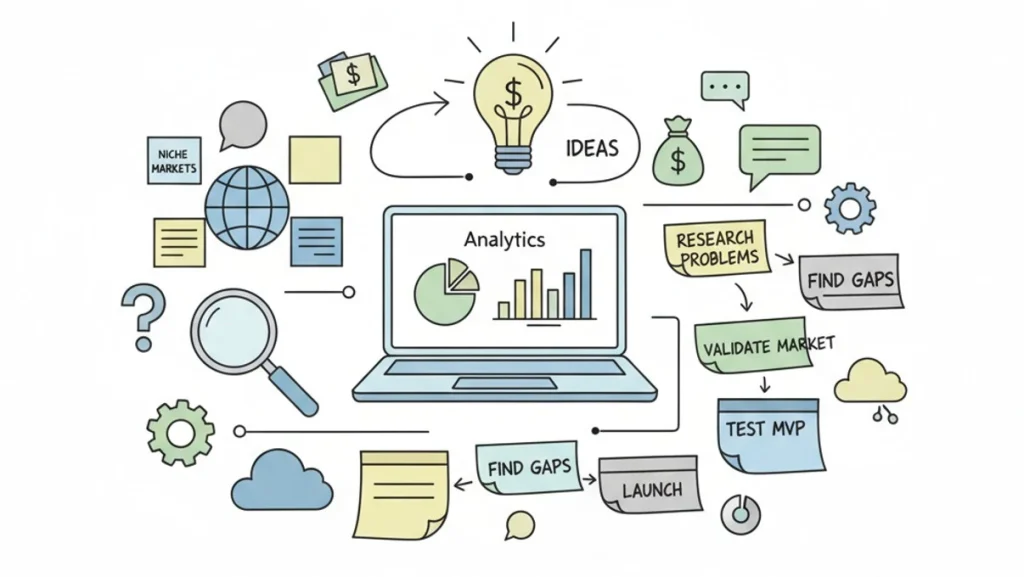
The journey of building a SaaS startup begins with clarity on customer pain and evolves into long-term retention. You will find a clear path that moves from idea validation to product launch and then to customer retention. The steps work for both developers and no-code builders alike.
Step 1: Validate the Problem
Start by talking to people who might use your product. Ask what problems they face and if they would pay for a solution. For example, an indie hacker might use a survey and a landing page built in Webflow to test interest. Validation stops you from wasting time on a product no one wants.
Step 2: Build the MVP
Now build your minimum viable product using tools like Bubble or Webflow so you can launch fast. Keep features minimal yet useful so users can see real value. This lets you test core assumptions, gather feedback, and improve without big cost or risk.
Step 3: Monetize Early
Choose how you will charge users before you go full launch. You might use Stripe to add subscription billing or usage-based plans. Decide if you will offer a free tier or go straight into paid. Monetization early allows you to learn what users value and what they will pay for.
Step 4: Launch to Market
When your product is ready, launch publicly and make it easy for users to sign up. Use a go-to-market strategy that includes content, outreach, and simple onboarding. Keep initial loops tight so users get value quickly and tell others. Launch does not mean you are finished. It signals the start of your growth phase.
Step 5: Retain and Grow
Focus on retention because a strong retention loop multiplies value and lowers churn. Use email, in-app messages, and product prompts to keep users engaged. For no-code builders, this can mean automating support workflows. Retention builds recurring income and sets the stage for growth.
What’s Next for SaaS? Trends to Watch
The SaaS world is evolving fast, and founders who keep up with new trends can move faster than the crowd. While core models still work, today’s tools and customer expectations are shifting. The trends below offer a glimpse into where the future is heading.
AI Integration
Artificial intelligence is becoming a built-in feature in many SaaS tools rather than a separate add-on. Large language models and SaaS co-pilots will help users complete tasks faster and with fewer steps. This shift means products must align with user behavior tracking and data-driven personalization.
Micro-SaaS
The rise of micro-SaaS shows that small, niche tools can compete in today’s market. Solo builders and small teams create products that solve narrow problems, serve tight audiences, and launch fast. These next-gen tools offer lean startup pathways without enterprise-scale overhead.
Usage-Based Pricing
Usage-based pricing replaces flat subscriptions in many cases and links payment to real value delivered. Customers pay for what they use, which can increase fairness and reduce churn. That pricing strategy demands strong metrics and close monitoring of behavior so the model stays profitable.
Regulatory Compliance
New rules like GDPR and data residency laws are reshaping the SaaS future and governance expectations. Providers will embed compliance features, transparency, and audit trails into their software from the start. Companies that lead here may gain trust and avoid costly legal exposure.
Frequently Asked Questions(FAQs)
While this guide covered the core mechanics and trends of SaaS, some practical questions still come up often. Below are answers to key things readers also search for but weren’t explained earlier in this content.
What is the Rule of 40 in SaaS?
The Rule of 40 is a financial benchmark where a SaaS company’s revenue growth rate plus profit margin should equal or exceed 40 percent. It helps investors and founders evaluate whether the business is growing efficiently while remaining financially healthy.
Can I customize a SaaS product, or am I stuck with standard features?
Many SaaS platforms offer customization through settings, feature toggles, integrations, or APIs. Some also allow branding and workflow adjustments. Customisation often depends on the pricing tier, with enterprise plans offering deeper control over user roles, design, and behavior.
How does the payback period impact SaaS growth?
Payback period tells you how long it takes to recover the cost of acquiring a customer. A short payback cycle allows quicker reinvestment into growth, while a long one increases financial risk and may slow down team or product expansion.
Why is churn such a critical metric in SaaS?
Churn reveals how many users stop paying or using the product. High churn means you’re constantly replacing lost customers, which increases acquisition costs. If not controlled, it undermines recurring revenue and makes scaling a SaaS business much harder.
What are the differences between self-serve and enterprise sales in SaaS?
Self-serve SaaS lets users sign up, pay, and onboard without sales help. It works well for low-cost or simple tools. Enterprise SaaS involves longer sales cycles, custom pricing, onboarding support, and contracts. Each approach fits a different customer segment.
Know your metric. Own your model
SaaS is more than a revenue stream. It is a system built on feedback, behavior, and steady relationships. Every decision, from how you price to how you onboard, shapes what comes next. When the numbers speak clearly, growth gets easier to plan.
If you are ready to take the next step, explore a churn calculator, a startup worksheet, or an SaaS audit checklist. Choose one tool, dive in, and let it guide your model forward with more clarity and control.